
Grand Lake Today / History
Before the shoreline. Beyond the postcard.
Grand Lake History
The river came first. The lake changed the map.
Meet the people and places behind Grand Lake O’ the Cherokees—from Cherokee history and the building of Pensacola Dam to relocated towns, fishing guides and the memories we still share.
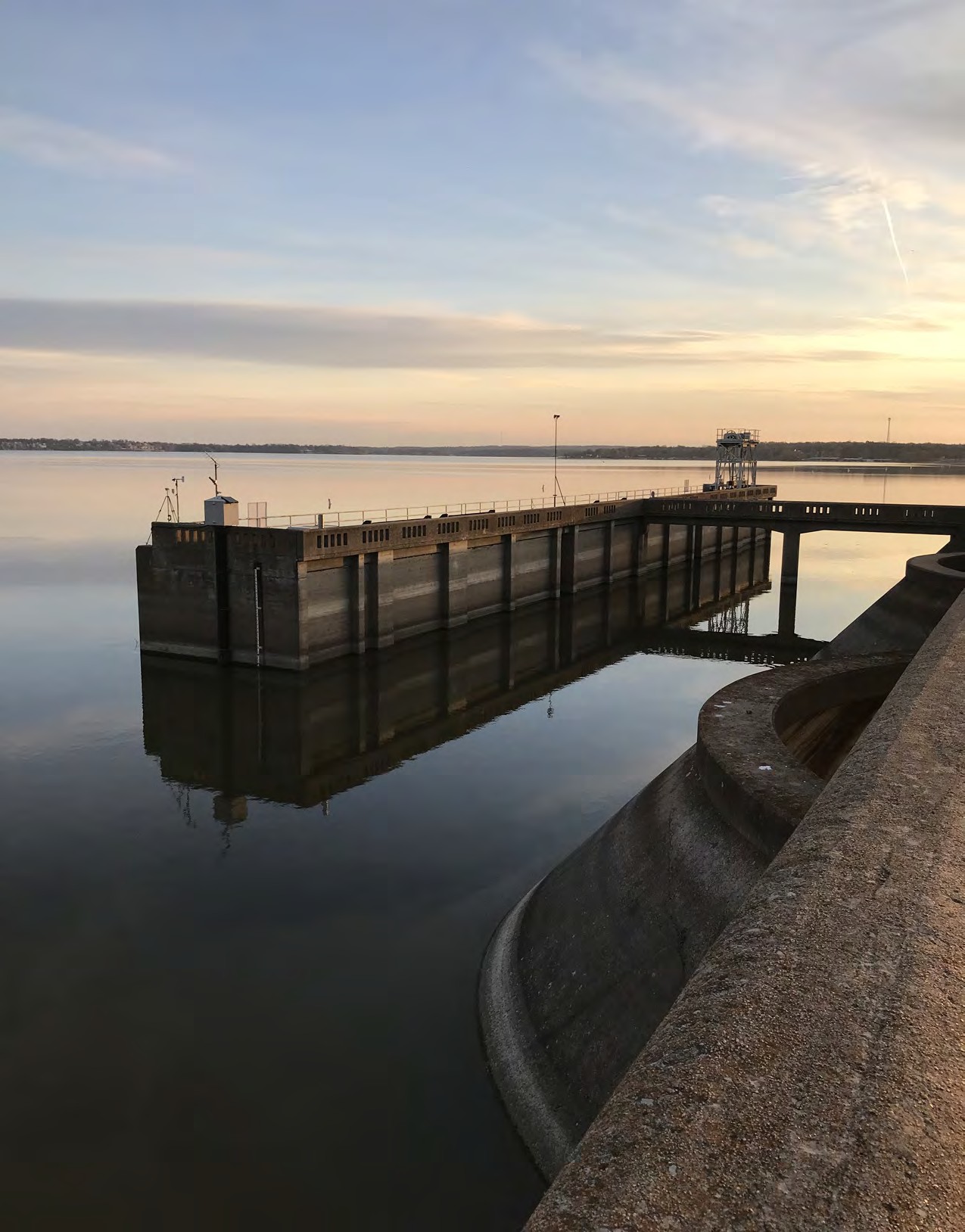
A lighter way into the lake
Got a minute? Get a Grand Lake fun fact.
Big dam numbers. Sailboat Bridge stories. Classic champions. Quick cards—with the sources and honest fine print attached.
Start exploring
Eight ways into the story
1938–1940
Pensacola Dam & the making of Grand Lake
The river, the vision, the workers and the summer the lake filled.
Explore the story →02Before the shoreline
Before the water
Cherokee history, Old Bernice and the important difference in Ketchum’s story.
Explore the story →03Places with a past
Monkey Island & lake life
A name with a story, Shangri-La, Har-Ber Village and Sailboat Bridge.
Explore the story →04Then & now
Fishing & From the Archives
Local guides, old catch photos and Grand Lake on the Classic stage.
Explore the story →Public shores & crossings
State parks & bridges
Honey Creek to Twin Bridges, Sailboat Bridge and the roads that changed with the water.
Explore the story →06Memory & relocation
Old cemeteries & remembered places
What official records establish—and why burial places deserve care, not treasure-map treatment.
Explore the story →071935 to the present
GRDA & the dam today
Public power, Lake Hudson, shoreline permits and the Miami flooding dispute.
Explore the story →08High water. Low water.
Floods, drawdowns & record levels
Dated measurements, historic releases and the difference between pool elevation and river stage.
Explore the story →A river. A lake. Generations.
A Grand Lake timeline
A starting point, not the whole history. These milestones connect the reservoir we know today with a much longer human story.
- 1828 / 1839
A homeland and a rebuilding nation
Cherokees who had migrated west moved to a reservation in present-day eastern Oklahoma in 1828. After the forced removal that began in 1838, the Cherokee Nation reunited under a new constitution in 1839. [1]
- 1899 / 1912
Ketchum before the lake
The original riverbank town was established in 1899. A new townsite was platted near the railroad in 1912—decades before the reservoir covered the first location. [6]
- 1935
An authority to build
Oklahoma’s legislature created the Grand River Dam Authority. Cherokee tribal member Henry Holderman had long championed a dam on the Grand River. [2]
- 1938–1940
Pensacola Dam takes shape
GRDA dates construction from December 30, 1938, to March 21, 1940. The first hydroelectric facility built in Oklahoma made a new lake possible. [3]
- 1939–1940
Bernice moves to higher ground
The new townsite was platted on December 20, 1939. Salvageable buildings and homes were removed from Old Bernice by summer 1940. [5]
- Summer 1940
The river becomes a lake
The Grand River steadily filled the reservoir through the summer; by late summer, GRDA describes Grand Lake as a reality. [4]
- 1968
A village for remembering
Harvey and Bernice Jones founded Har-Ber Village Museum, preserving buildings, objects and stories of earlier American life beside the lake. [7]
- 2001
A new Sailboat Bridge crossing
Replacement bridges opened after work began in 2000; the original crossing had been built in 1938–39. [8]
- 2013 / 2016 / 2024
Our own pages of lake history
Some history came home in a fishing photo.
The Grand Lake Retro Report brings old Grand Fishing Report photos and stories back into view—with names, dates and credit to the people who kept the record.
Browse From the Archives →Sources & further reading
Checked November 10, 2026. Historical summaries are written in our own words; source photographs are not reused unless specifically credited.
- Cherokee Nation, “History”The Nation’s own account of removal, rebuilding, sovereignty and continuity; updated August 23, 2026.
- Glen Roberson, “Grand River Dam Authority,” Oklahoma Historical SocietyHenry Holderman, the 1935 enabling legislation, W. R. Holway and the broader project history.
- GRDA, “Pensacola Dam”GRDA’s stated construction dates, location and first-hydroelectric-facility description.
- GRDA, “This Is Man’s Deed,” Power for Progress, September 2019Lake filling through summer 1940; lead engineer W. R. Holway; National Register listing in 2003.
- Sharon Koons, “Bernice,” Oklahoma Historical SocietyOriginal town in 1912, new townsite platted December 20, 1939, and the 1940 move.
- Craig County Genealogical Society, “Ketchum,” Oklahoma Historical SocietyOriginal townsite in 1899 and the railroad-related move beginning in 1912, before the lake.
- Har-Ber Village Museum, “Bernice & Harvey Jones”The museum’s own founding account: Harvey and Bernice Jones, 1968, and the origin of its name.
- Dianna Everett, “Sailboat Bridge,” Oklahoma Historical SocietyOriginal 1938–39 bridge and the replacement crossing opened in 2001.
- Mike Suchan, “A look at Grand Lake Classic 2024,” Bassmaster, March 18, 2024Grand Lake’s 2013 and 2016 Classics, their winners, and the 2024 return.
- Bryan Brasher, “Hamner completes wire-to-wire Bassmaster Classic win,” Bassmaster, March 24, 2024Justin Hamner’s 2024 Grand Lake championship, with 58 pounds, 3 ounces.
- Shelby L. Hunter and Laura G. Labriola, USGS Scientific Investigations Report 2019–5040Cover photograph credited to Kevin Smith, U.S. Geological Survey. The report identifies copyrighted exceptions; none is marked for this USGS-credited photograph.
More chapters in the same river
Relocation, power & changing water
- 1939–1940
Burial places move, too
Grove’s official Buzzard Cemetery history records a 1939 land purchase and 1940 transfer for a cemetery established to receive relocated burials. [1]
- 1954 / 1957
Low water, then high water
The USGS 2005 report preserves the post-fill low of September 1954 and the historic high of May 1957, with the gauge datum stated. [2]
- 1964
A second lake on the Grand
GRDA’s Robert S. Kerr Dam added hydroelectric capacity and created Lake Hudson. [3]
- 2015 / 2019
Flood years in the official record
Pensacola’s big flows are documented—but inflow, release, hourly records and downstream peaks must remain distinct. [4]
- 2022–2026
Miami, FERC and the next license
A court remand, subsequent FERC action and a revised 2026 study schedule are different steps in a continuing story. [5]
Sources & further reading
Checked November 10, 2026. Historical summaries are written in our own words; source photographs are not reused unless specifically credited.
- City of Grove, “Buzzard Cemetery”Official cemetery history: one of six GRDA relocation cemeteries; November 6, 1939 land purchase; February 1940 deed transfer; municipal care from 1968. Burial transcription is not reproduced.
- USGS, Water Resources Data Oklahoma, water year 2005, Volume 1, pages 232–235Station 07190000: 755.27 ft on May 25, 1957; 713.41 ft on September 28, 1954 after first full power pool. Station 07190500, 3.6 miles downstream: computed 300,000-cfs peak May 20, 1943, versus 287,000-cfs daily mean. Scope ends with the 2005 report; gauge datum is stated separately.
- GRDA, “Revisiting Robert S. Kerr Dam,” October 21, 2019January 2, 1962 groundbreaking; October 17, 1964 completion milestone; 114 MW and creation of Lake Hudson. Refers to GRDA’s Kerr Dam, not the Corps’ Arkansas River reservoir of the same name.
- GRDA, Final License Application, Exhibit B, Appendix B-8, May 2023Appendix B-8, pages 4–5, Table 2.3.1-1: highest observed hourly total dam discharge 236,165 cfs on December 29, 2015, within August 14, 2015–December 31, 2022. The source’s hour lacks a stated time zone, so only the date is used.
- FERC, Federal Register, revised Pensacola relicensing schedule, October 30, 2026Project 1494-438: May 30, 2023 application; sediment-report comments due December 2, 2026, final report January 31, 2027; target environmental-analysis notice March 17, 2027. Targets may change.